A new book by Dr. Madhu Shashanka · Fall 2026

Coherence

What Wins When Everyone Can Go Fast

Why coherence, not capability, decides which enterprises win the age of abundant AI.

The central argument

When execution becomes cheap, coherence becomes the bottleneck.

Coherence is the integrity of the link between what an organization's systems do and what the enterprise intends.

For thirty years, the winning instinct was to move first and adopt fastest. That instinct was correct, because capability was scarce and access was uneven. Agentic AI has ended those conditions.

When everyone can move fast, moving fast stops being an advantage. What wins instead is coherence.

Generative AI made intelligence abundant. Agentic AI is making execution abundant. Organizations built for an era when both were scarce now meet a world where neither is, and existing management thinking has little to say about that shift.

The book reasons from first principles. It starts from one economic shift, the collapse in the cost of execution, and follows it to where it leads: to why the firm exists, what becomes scarce when execution is free, and where advantage must migrate. The conclusion is not a forecast about technology. It is a deduction about organizations. When intelligence is everywhere, the scarce resource is the capacity to deploy it without descending into incoherence.

At the center of the story is the person now accountable for that capacity: the Chief AI Officer, the Chief Data Officer, the rising executive charged with turning a historic abundance of intelligence into durable advantage rather than organizational debt. This is the book that gives that role its argument.

From the book

Four ideas that reframe the AI conversation

01

The Coasian Inversion

For a century, firms existed to allocate scarce execution. Now that execution is nearly free, that purpose has flipped: the organization's job is to maintain coherence among abundant autonomous systems, and the structures built for the old world are quietly failing at the new one.

02

Complexity Debt

Every autonomous system an organization deploys adds coordination cost that no dashboard reports. Like technical debt before it had a name, this debt compounds invisibly until it surfaces as crisis, and it accumulates faster because deploying AI now takes almost no effort at all.

03

The Moat Is Coherence, Not Capability

When every competitor can buy the same models and the same data, none of it confers advantage. The durable edge belongs to the organization that has made itself coherent: the one thing a vendor cannot sell and a rival cannot copy.

04

Coherence Is a Public Good

When many enterprises reason through the same AI, their judgments converge, and the diversity that keeps shocks contained disappears. We saw this in 2008, when a shared model failed everywhere at once. Widespread AI can recreate that correlated fragility, it is a systemic risk.

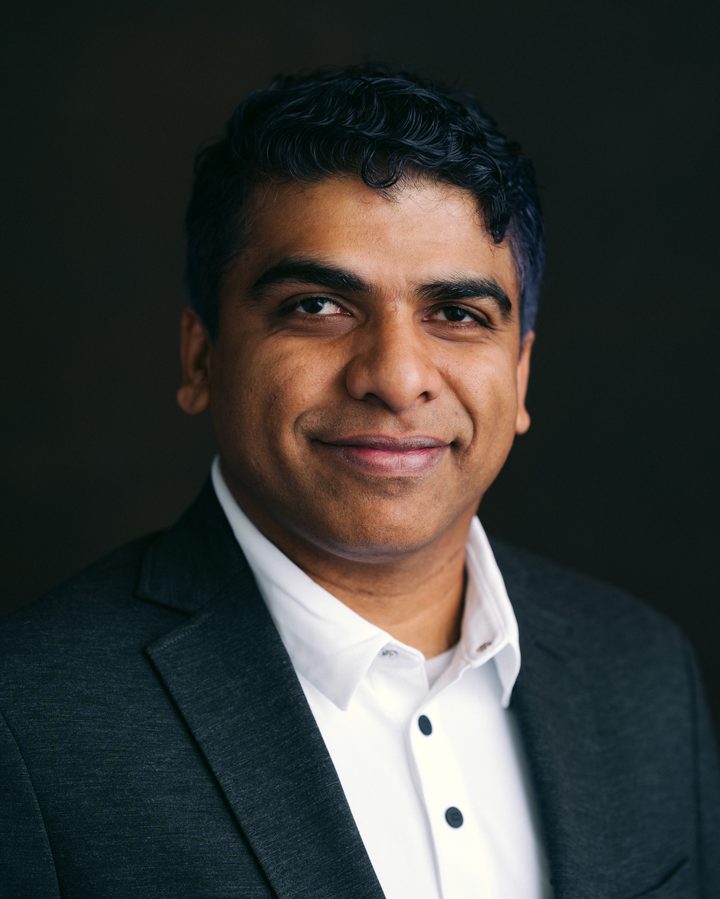
Dr. Madhu Shashanka

About the author

Dr. Madhu Shashanka

Dr. Madhu Shashanka studies complex intelligent systems.

He earned his PhD in computational neuroscience studying how the brain coordinates vast numbers of independent units into coherent behavior, then spent two decades applying that lens to organizations, building and deploying enterprise AI across manufacturing, financial services, social media, and cybersecurity.

His book Coherence: What Wins When Everyone Can Go Fast brings the two halves of that career together: what the science of coordinated systems reveals about competing in the age of abundant intelligence.

PhD, Computational Neuroscience Former Director of Machine Learning & Data Science, Charles Schwab Co-founder, Chief Scientist & CTO, Concentric AI AI strategy for CIO / CISO communities, Fortune 500

Advance praise

What readers are saying

"
I have spent my career building systems where locally correct decisions compound into complexity no one can untangle later. Shashanka's insight is that agentic AI does this to entire organizations, at a speed software never reached. He has taken a hard-won lesson from systems engineering and shown it is now an organizational law. This is the rare AI book grounded in how complex systems actually fail.
Shireesh Thota Corporate Vice President, Microsoft
"
I build AI models for a living, and Shashanka gets right what most books miss: the model working is the easy part; keeping the organization around it coherent is the real challenge. Rigorous, grounded, and genuinely useful for anyone deploying AI at scale.
Dr. Arun Ravindran Partner & VP, AI Innovation & Transformation, Boston Consulting Group (BCG)
"
In transformation, the technology is never the hard part. Keeping the organization coherent through the change is. Shashanka is the first to give that challenge a real framework for the agentic era. Essential reading for any leader scaling AI across an enterprise.
Ashish Lahoti Chief Transformation Officer, ServiceNow
"
After more than two decades building AI and data science capabilities across industries, I have learned that the winners in the AI era are not the companies with the most pilots, the newest models, or the loudest strategy. The most expensive AI failures I have seen were not failures of intelligence, but failures of alignment, accountability, workflow, and leadership discipline. Shashanka gives that leadership problem its proper name: coherence. This book speaks to the question every serious executive now faces: how do we move at AI speed without becoming organizationally incoherent? For leaders building AI at scale, Coherence is not just timely. It is necessary.
Dr. Aleksandar Lazarevic AI Executive & Fractional Chief AI Officer; formerly VP Analytics, HelloFresh, and Stanley Black & Decker
"
Across multiple enterprises, I've seen how fast-moving teams and proliferating systems create fragmentation that becomes the real constraint. As AI accelerates execution, coherence becomes the leadership challenge. Shashanka captures that shift with clarity and gives organizations a practical framework to stay aligned as autonomy scales. Coherence is rigorous, grounded, and essential reading for leaders modernizing in the agentic era.
Muru Balakrishnan Enterprise Data & AI Executive; former Head of Data, Analytics & AI, Frontier Airlines
"
In edge AI, a system that works in the lab but fails in the real world is no system at all. Shashanka brings that same discipline to the enterprise: reliability and verifiability, not raw capability, decide where autonomy can be trusted. A rigorous and genuinely important book.
Dr. Massimiliano Versace VP Emergent AI, Analog Devices; formerly Cofounder & CEO, Neurala
"
The hard question in any critical system isn't capability, it's dependability under conditions you didn't foresee. Shashanka brings that discipline to the enterprise, showing why coherence, not raw power, is what lets organizations trust what they've built. An important, clarifying book.
Dr. Vivek Menon Mission Assurance Director, U.S. Department of Defense
"
In an era of AI abundance, organizations are already experiencing pain that they haven't been able to name. Shashanka identifies incoherence as the cause and offers robust and insightful principles and frameworks to help achieve organizational coherence.
Satya Patel Partner, Homebrew; formerly VP Product at Twitter & Partner at Battery Ventures
"
Cheap intelligence and agent sprawl doesn’t create AI advantage. It comes from whether the organization stays coherent enough to compound its core assets instead of fragmenting them. I have built AI-native products and platforms at 5 public companies where that difference decides unit economics, distribution and market position. Shashanka makes the strategic case rigorously: coherence is the real moat when intelligence is commoditized with no control. Essential reading for anyone building AI as a durable, competitive advantage rather than a feature.
Rahul Todkar VP, Head of Data & AI at Tripadvisor; former Head of Data Science & AI at LinkedIn
"
What a fascinating perspective — and one that makes so much sense once you're aware of the trajectory of biological intelligence, where the next level has always been reached through communication, cooperation, and what Shashanka rightly points out here: coherence. This book should be on the list of anyone thinking about how AI and autonomous systems will impact their life and work.
Dr. Sai Gaddam Serial Entrepreneur; Author, Journey of the Mind and A Billion Wicked Thoughts
"
Rigorous enough to be taken seriously and concrete enough to change how we build. Shashanka turns a problem most teams only feel into something they can measure and manage.
Collin Chan SVP Engineering, WellSky

Speaking & keynotes

Bring Dr. Shashanka to your organization.

He speaks to executive teams, leadership conferences, and corporate offsites on coherence, organizational strategy, and leading in complexity.

or email speaking@coherise.com Download the one-pager (PDF) ↗